01
Designed for one hand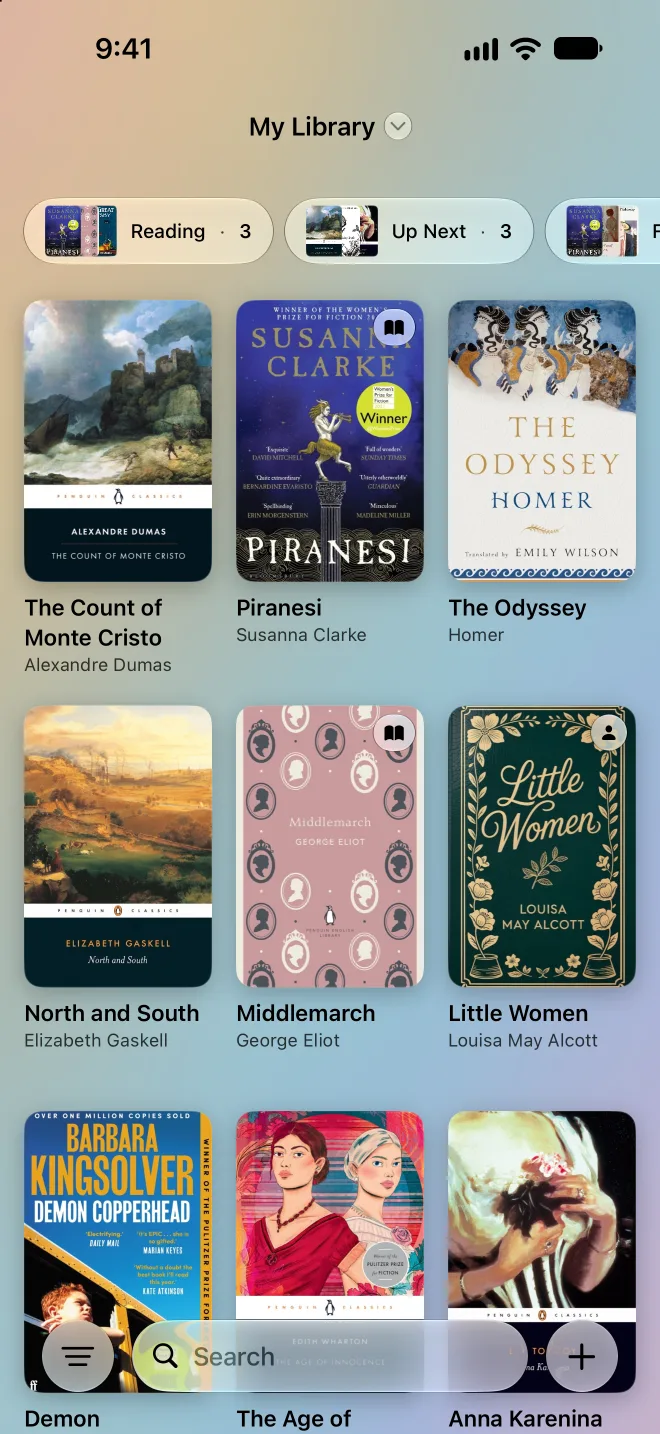
iPhone
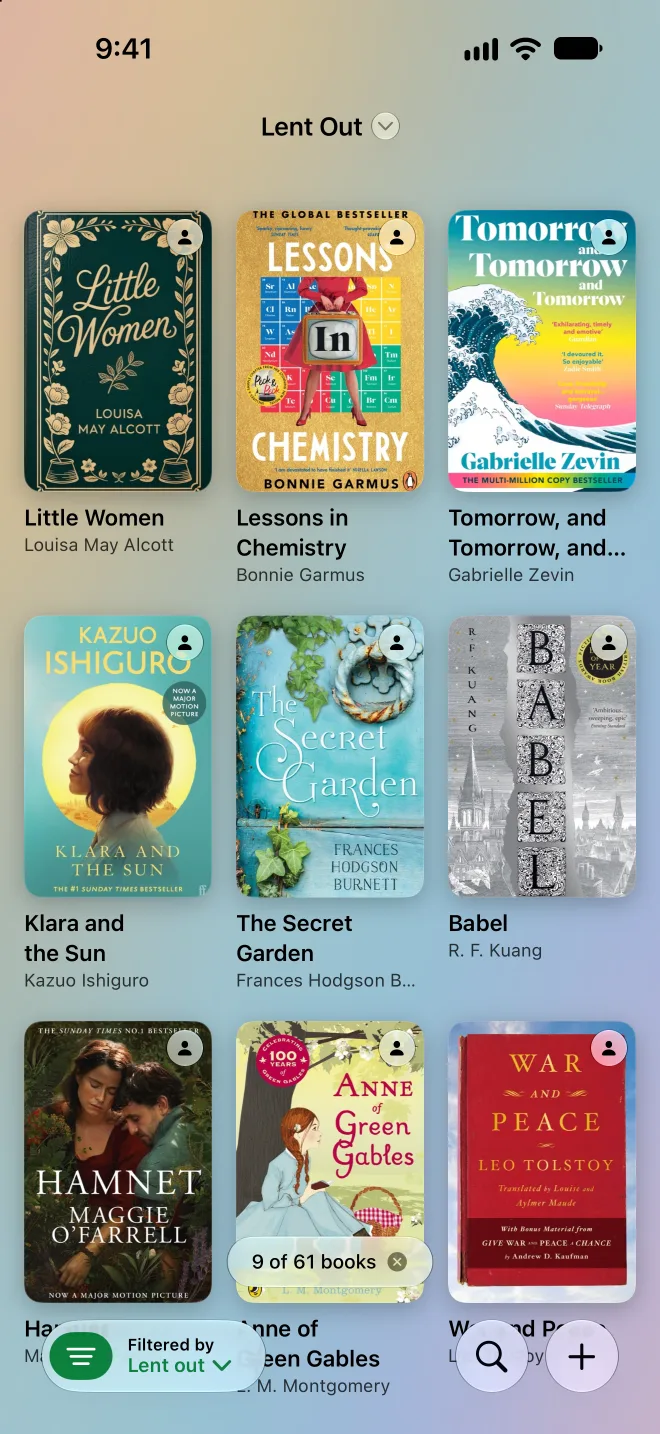
People check their library in a bookshop with a book in the other hand, so the camera is the front door. Scanning works from the Lock Screen and the Camera Control, before the app is even open.
Volumes is our own home-library app for iPhone, iPad and Mac: three native apps from one codebase, with no backend to run and AI that works on the device.
We're a product studio. Clients come to us with an idea, and we turn it into a product: what to build, how it should work, and how to get it to market.
Volumes is that process applied to an idea of our own. We defined it, designed it, built it and launched it on the App Store, and we still run it today.
The idea is simple: people with a lot of books want to know what they own, where it is and who borrowed it. We turned it into native apps for iPhone, iPad and Mac, with on-device AI and no servers to run.
From idea to App Store, handled end to end by our team.
native apps from one codebase
Volumes answers all three in production, with real users and real libraries.
If you're building for Apple devices, this is the model: one team and one SwiftUI codebase, with each device getting a layout designed for how it's actually used. Nothing is ported or stretched.
People check their library in a bookshop with a book in the other hand, so the camera is the front door. Scanning works from the Lock Screen and the Camera Control, before the app is even open.
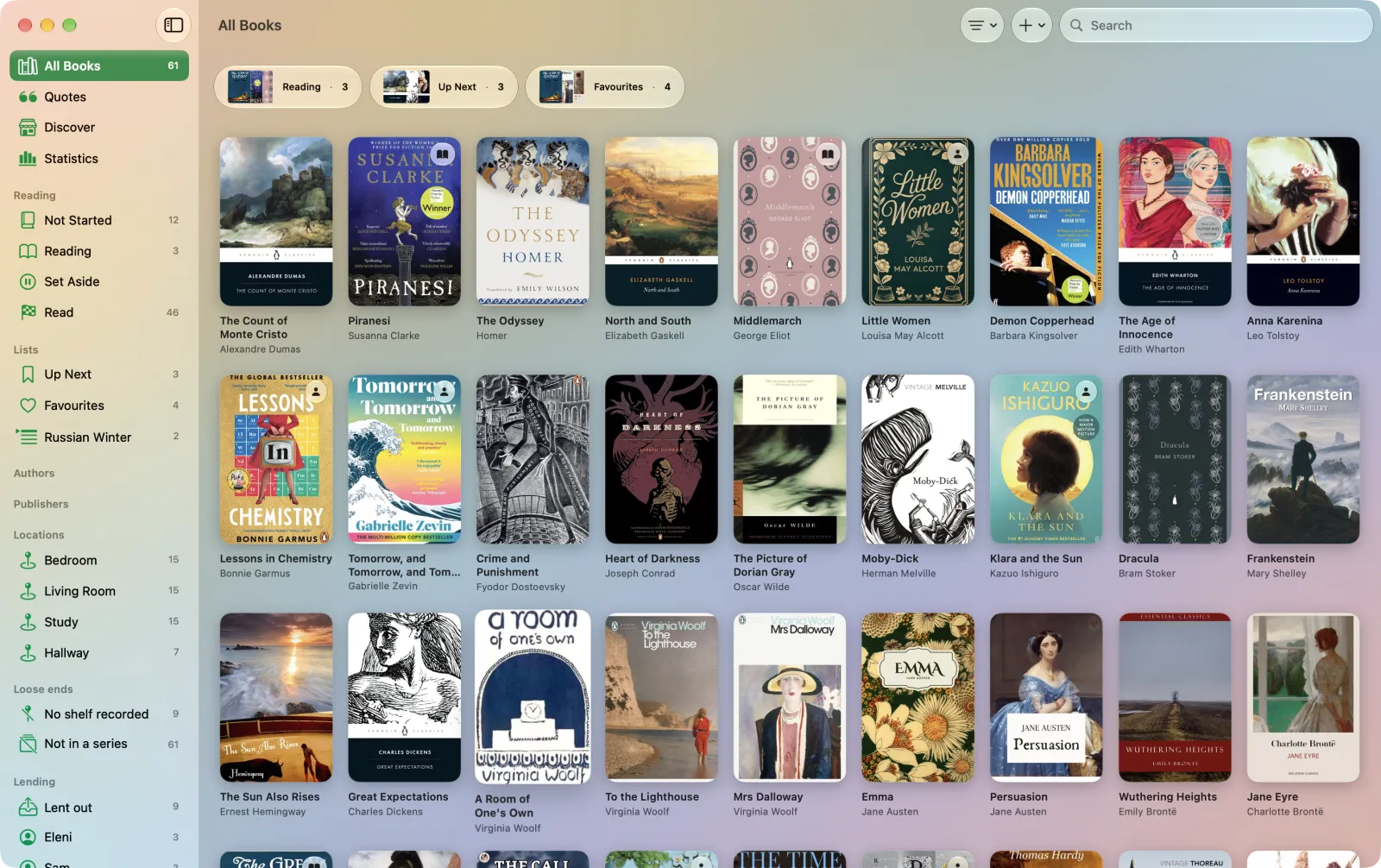
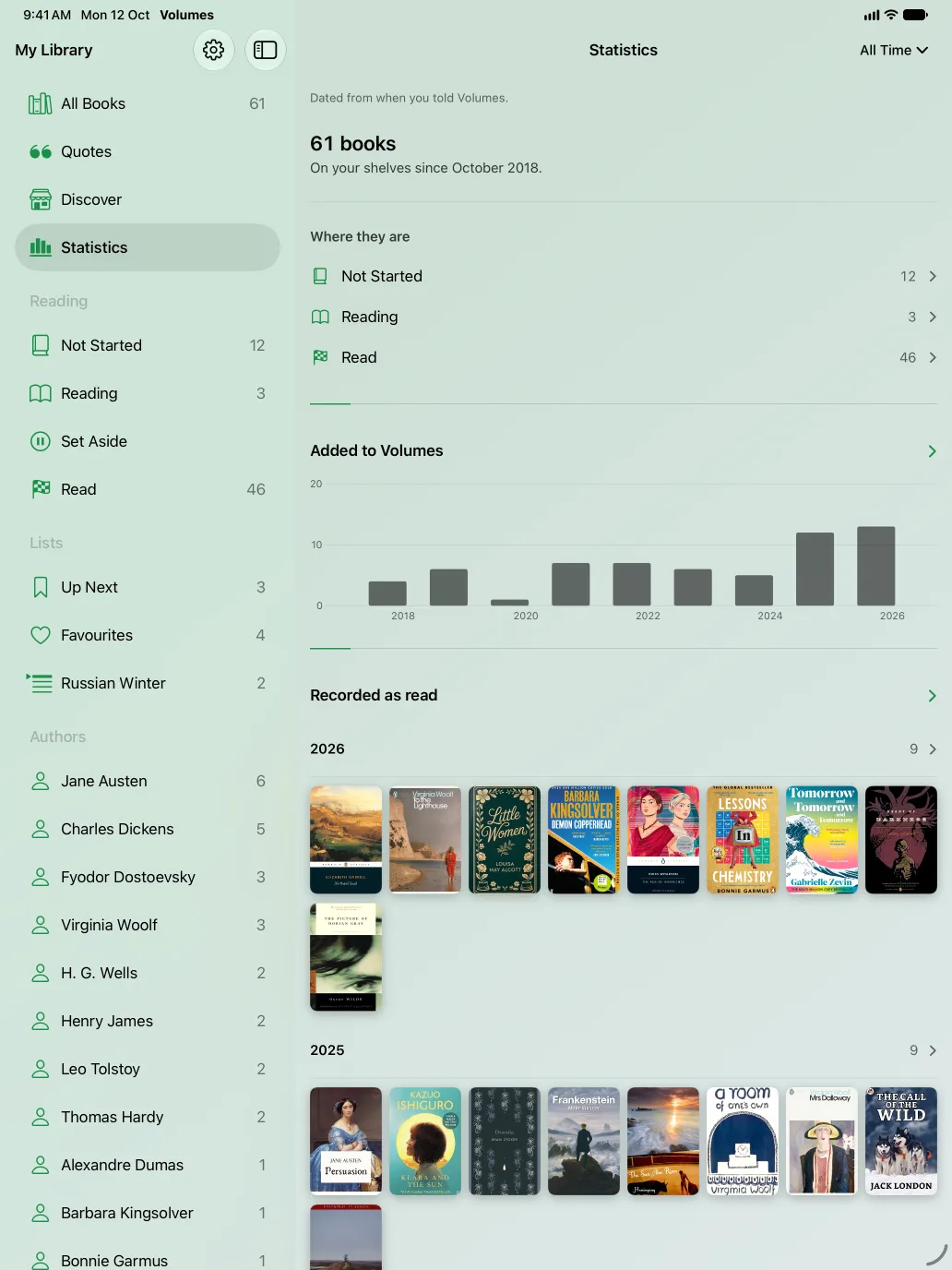
A split view with the whole library in the sidebar and statistics drawn with Swift Charts. On the foldable iPhone Duo the same layout appears when the phone opens, and keeps its place when it folds.
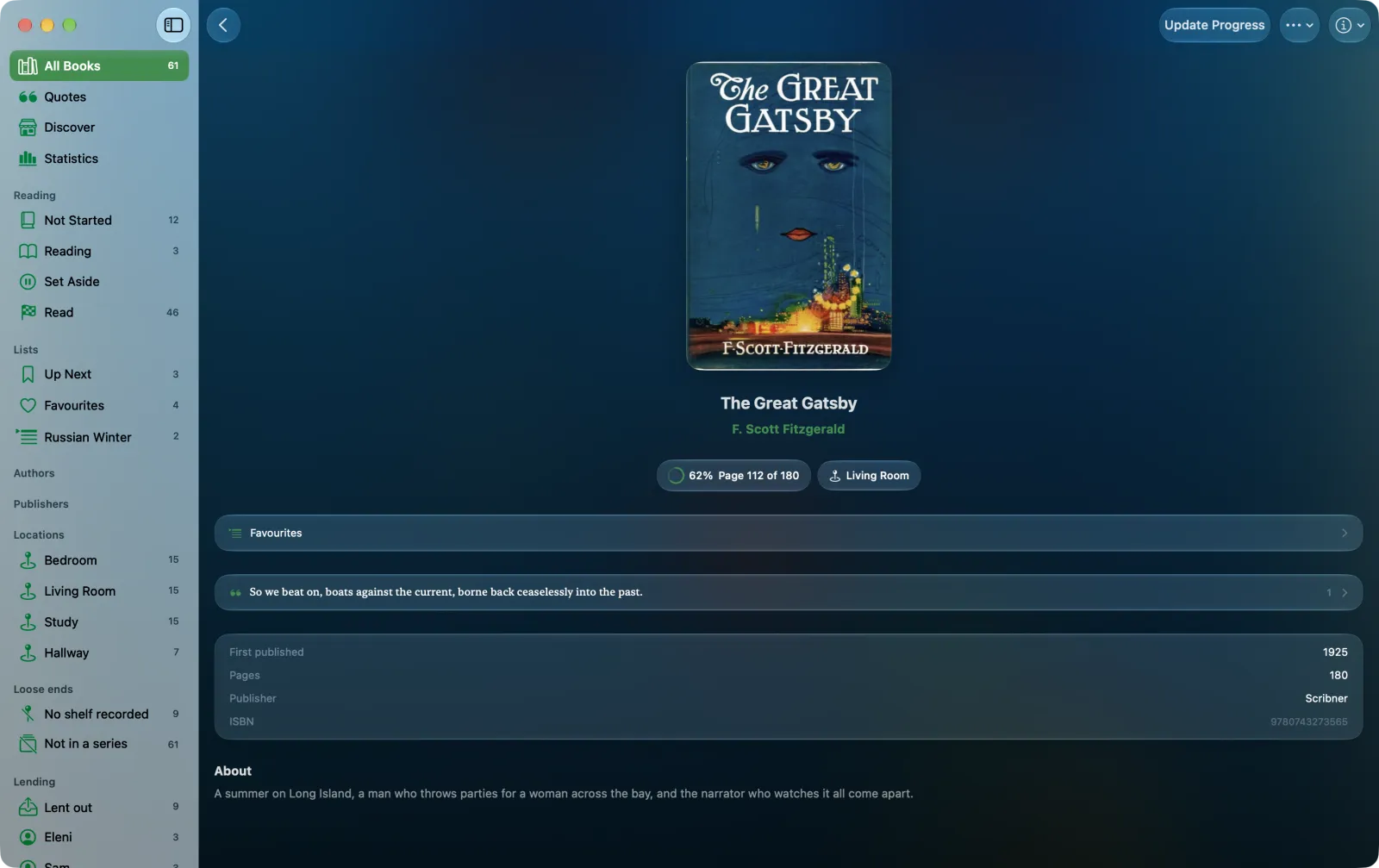
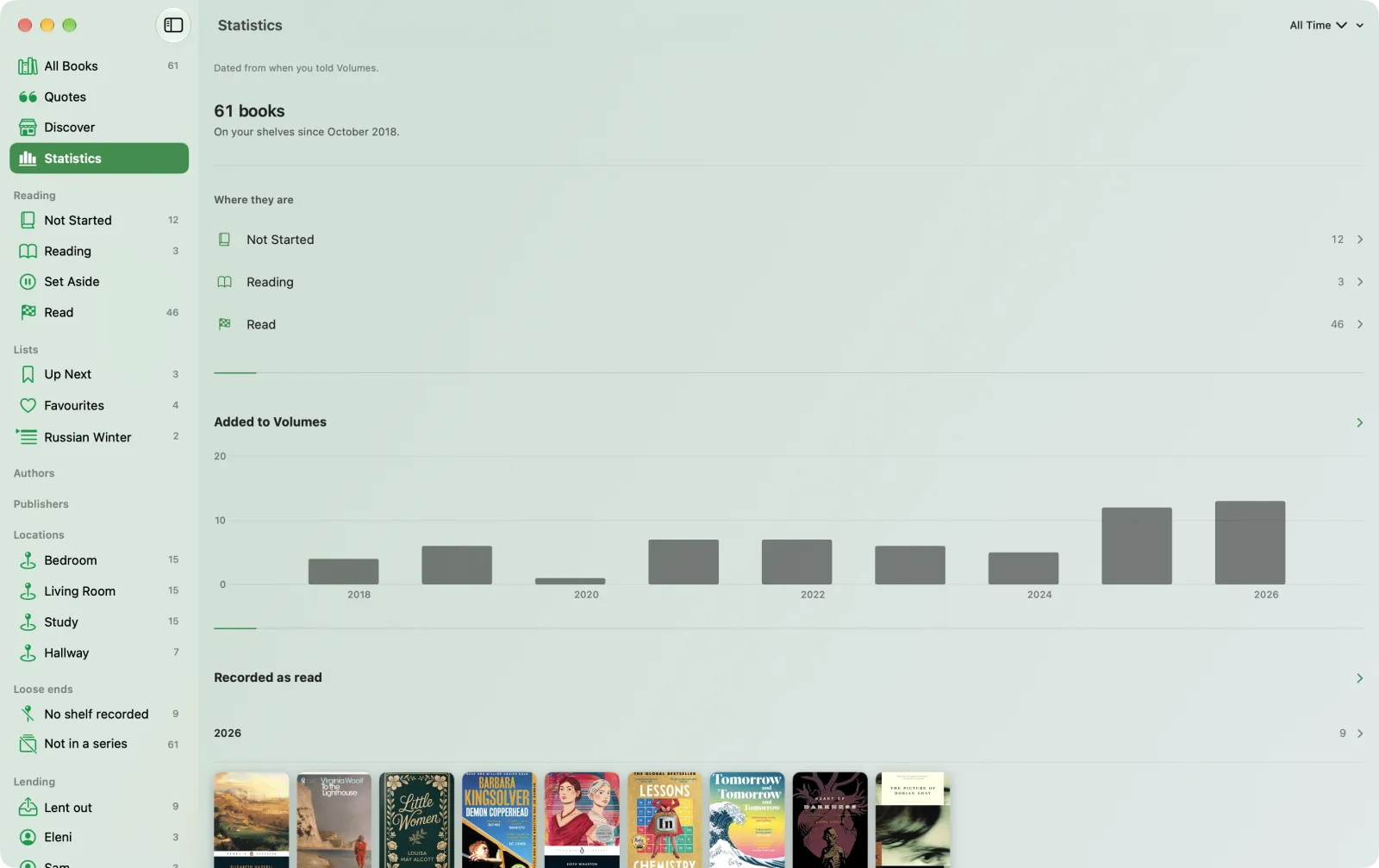
A true macOS app, not an iPad app in a window: a sidebar, pointer and keyboard behaviour, and the Mac's own sandbox. It ships from the same codebase in the same release.
A launch takes more than the app. We delivered everything around it too.
The Volumes identity and getvolumes.app, including the page that opens a lent book for someone who doesn't have the app yet.
Store screenshots captured by script from a seeded library and framed automatically, plus the privacy manifest and the listing itself.
Xcode Cloud runs the tests and cuts TestFlight and App Store builds, so iPhone, iPad and Mac ship together.
Widgets, Siri and Shortcuts, Spotlight, a Share extension and an App Clip, so the app is useful from wherever the user already is.
Users can search in plain words, like "unread books in the hallway". Most of those sentences never reach a model. A rules-based parser reads them against the user's own library and answers instantly, the same way on every device.
Apple's on-device model handles only what the parser can't. Its answers follow a fixed format, can only use values from the user's own library, and appear as suggestions the user confirms. On devices without Apple Intelligence, search still works.
No single book database covers everything, and coverage thins outside English. Volumes reads each ISBN, asks the source most likely to know that book, and falls back to the next if it comes up empty.
We measured the change on real samples before shipping it. German small-press books went from 2 found out of 50 to all 50, and French small-press books from 16 out of 38 to all 38.
Volumes keeps each library in the user's own iCloud. There's no account to create, no user database for us to secure, and no hosting bill that grows with every new user.
Sharing works without a backend too. A lending link carries the book's details in the part of the URL browsers never send to a server, so a static page can open it. A friend without the app sees it in an App Clip.
Apple adds new capabilities every year, and apps that adopt them early get noticed. Volumes uses Liquid Glass, Visual Intelligence, the Camera Control and Apple's on-device model, and it supported the foldable iPhone Duo from its first release.
The fundamentals got the same care. VoiceOver, larger text and Reduce Motion are supported throughout.
Performance tested at scale on real devices, with seeded libraries of 1,052 and 3,400 books.
Automated builds and tests through Xcode Cloud, for iPhone, iPad and Mac at once.
Crash reporting on every release with Crashlytics wired into each App Store build.
Accessibility built in with VoiceOver, larger text and Reduce Motion throughout.
Privacy and App Store compliance with a privacy manifest that matches the store's privacy labels.
Easy to switch to with imports from Goodreads, StoryGraph and LibraryThing, so new users bring their library with them.
Beautiful app, very fast even on my 1k+ books library. Nice way to easily see which books I have and where I have them. Switching over from LibraryThing was very quick.Grunborg · App Store review, Netherlands · ★★★★★
Volumes is ours, so every shortcut would have come back to us. That's why it's simple to run, its AI behaves predictably, and the releases kept coming after launch.
Client products get the same treatment. We help shape the product, design it, build it natively and get it into the store, and we stay on after launch.
If you're planning a consumer app for Apple devices, an iPad or Mac tool for your team, AI features that keep customer data on the device, or a product that shouldn't come with a server bill, we'd love to hear about it.